

Plitvice Lakes National Park
Sixteen terraced lakes connected by waterfalls and wooden boardwalks, best walked early before the tour buses arrive from Zagreb.
Photo by Rick Govic on Unsplash
Limestone islands scatter down the Adriatic like stepping stones, the water so clear you can count sea urchins ten meters down. Pine resin hangs in the afternoon heat, and church bells echo across stone harbors at dusk.
Junto AI builds your full itinerary around your dates, your group and the way you like to travel.
Sixteen terraced lakes connected by waterfalls and wooden boardwalks, best walked early before the tour buses arrive from Zagreb.
Photo by Rick Govic on Unsplash

Day-charter from Hvar town to anchor at Palmižana, swim off the boat, and eat grilled fish at Toto's or Laganini.
Photo by Ian Mackey on Unsplash

Two kilometers of 13th-century ramparts circling terracotta rooftops; go at opening or after 6pm to skip cruise crowds.

Hunt black truffles around Motovun with Karlić family dogs, then taste Malvazija wine at Kabola or Kozlović vineyards.
Photo by Dominik Puskas on Unsplash

The shifting white-pebble spit at Bol pulls windsurfers from June through September; ferry over from Split in under an hour.
Photo by Piotr Musioł on Unsplash

Skradinski Buk falls allow swimming in summer mornings; combine with a boat to Visovac Monastery on its tiny island.
Photo by Rick Govic on Unsplash
Croatia stretches its coastline along more than a thousand islands, and a week here means choosing your slice carefully. Most travelers split seven days between the Dalmatian coast and one inland detour, flying into Split or Dubrovnik and ferrying outward. The country runs on a slower clock once you leave the walled cities. Mornings are for swimming, afternoons for shade and long lunches of grilled branzino with blitva, evenings for walking stone alleys until the cafés spill onto the squares.
Start in Split, where Diocletian's Palace is not a museum but a living quarter with apartments built into 4th-century walls and laundry strung between Roman columns. From here, ferries fan out to Hvar, Brač, and Vis. Hvar town draws the yacht crowd, but the island's interior holds lavender fields around Velo Grablje and the abandoned village of Malo Grablje, where one family still cooks in a stone konoba. Vis, further out and quieter, rewards the extra ferry hour with the Blue Cave at Biševo and Komiža's fishing harbor.
Inland, Plitvice and Krka offer two different waterfall experiences: Plitvice for the scale and turquoise pools, Krka for actually getting in the water. Drivers can connect them with a stop in Zadar to hear the Sea Organ at sunset. Istria, up north, plays by different rules, with hill towns like Grožnjan and Rovinj that feel more Venetian than Balkan.
Mid-range travelers do well in family-run sobe (rooms) and small hotels, budgeting around 120-180 euros per night in shoulder season. Go in late May, early June, or September to avoid August crowds and Adriatic heat. Rent a car for inland sections; rely on Jadrolinija ferries between islands.
From the first idea to settling up at the end, Junto handles the planning so you don't have to be the group's travel agent.
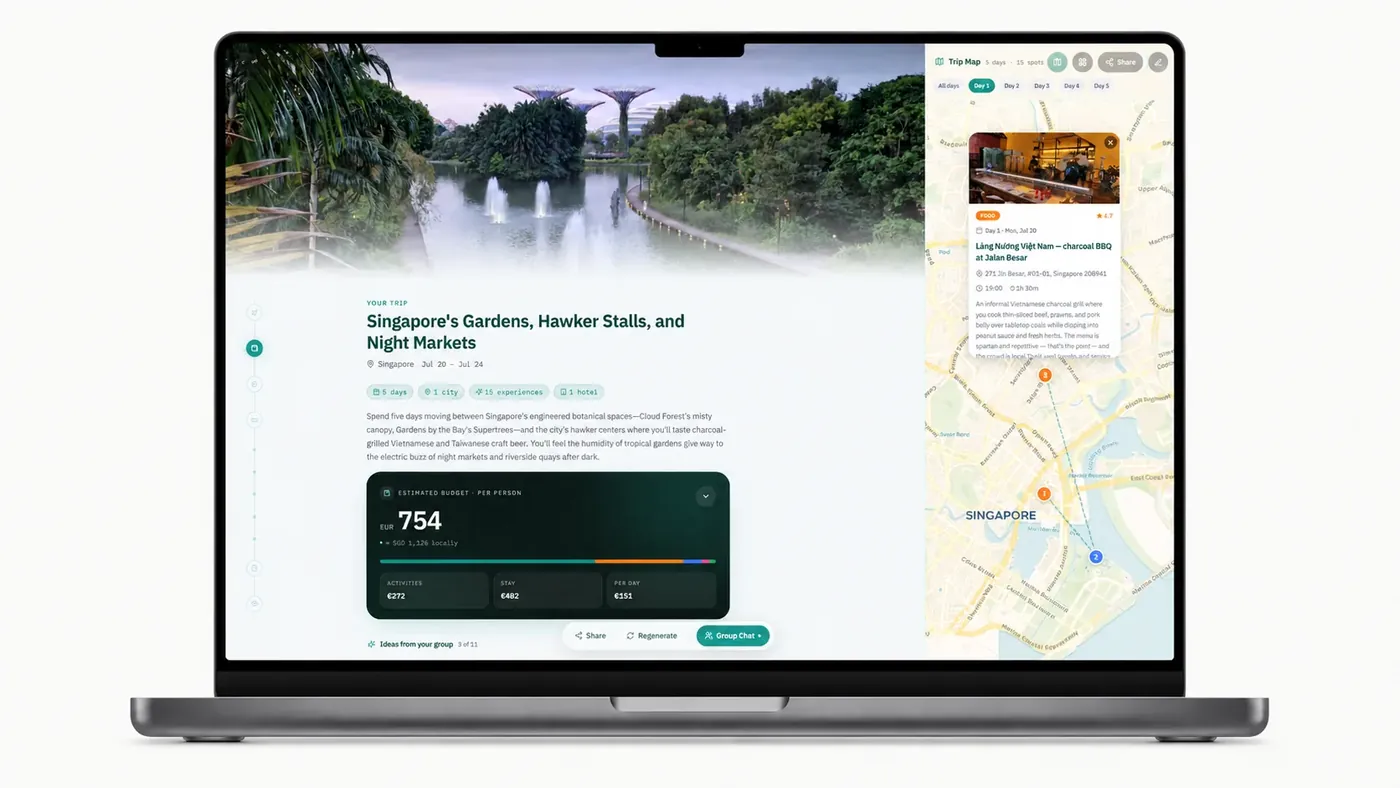
Junto AI maps every day to your pace, dates and the people you're with, with venues, timings and a real route you can actually follow.
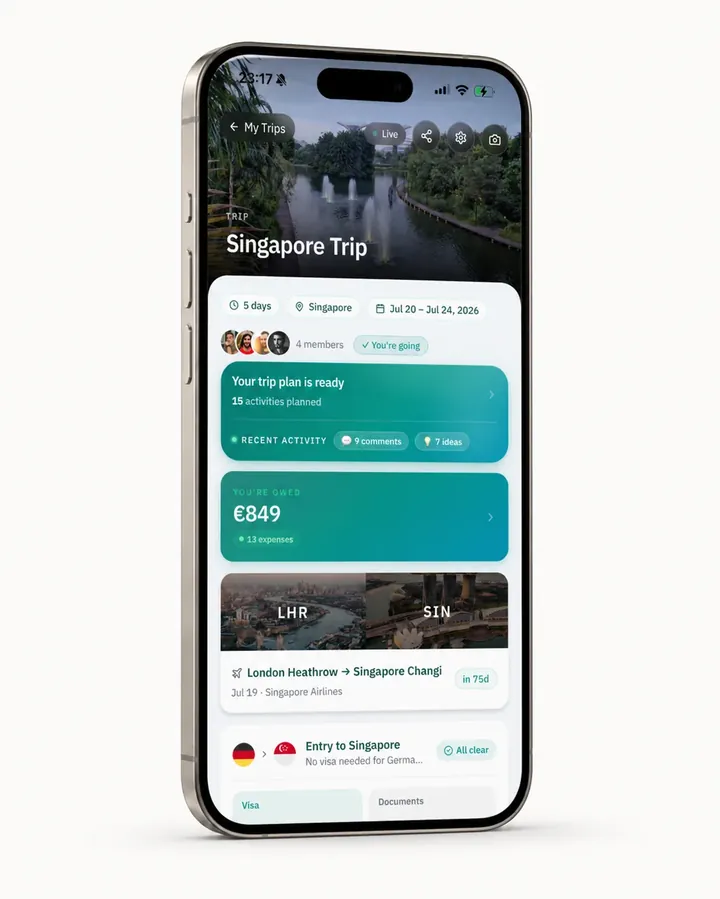
Dates, crew, flights, expenses and entry requirements all in one dashboard, so nothing falls through the cracks.
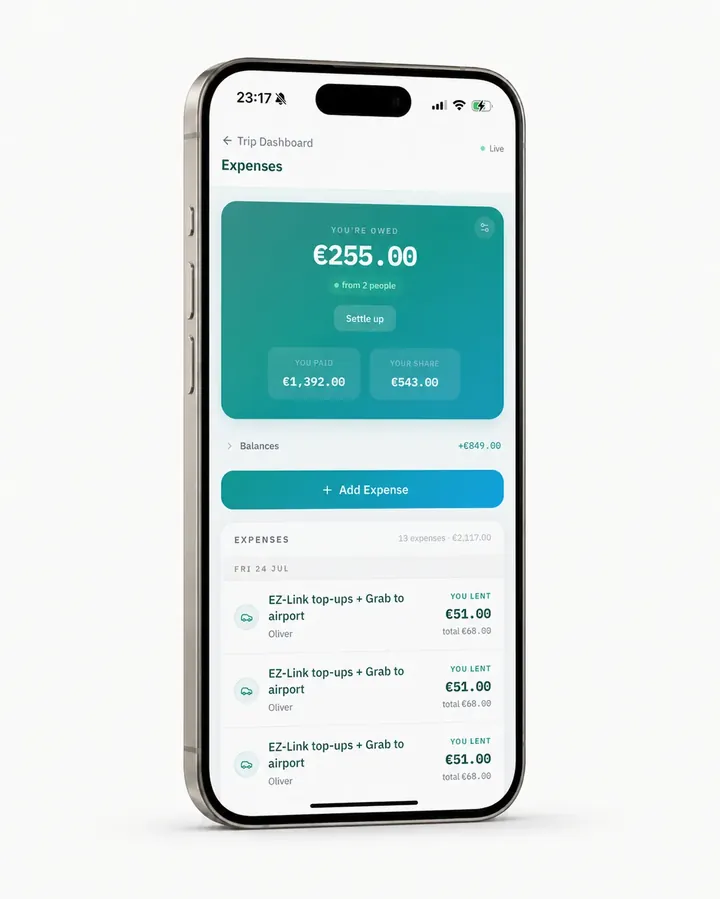
Track every shared expense and let Junto figure out who owes what. No spreadsheets, no awkward Venmos.
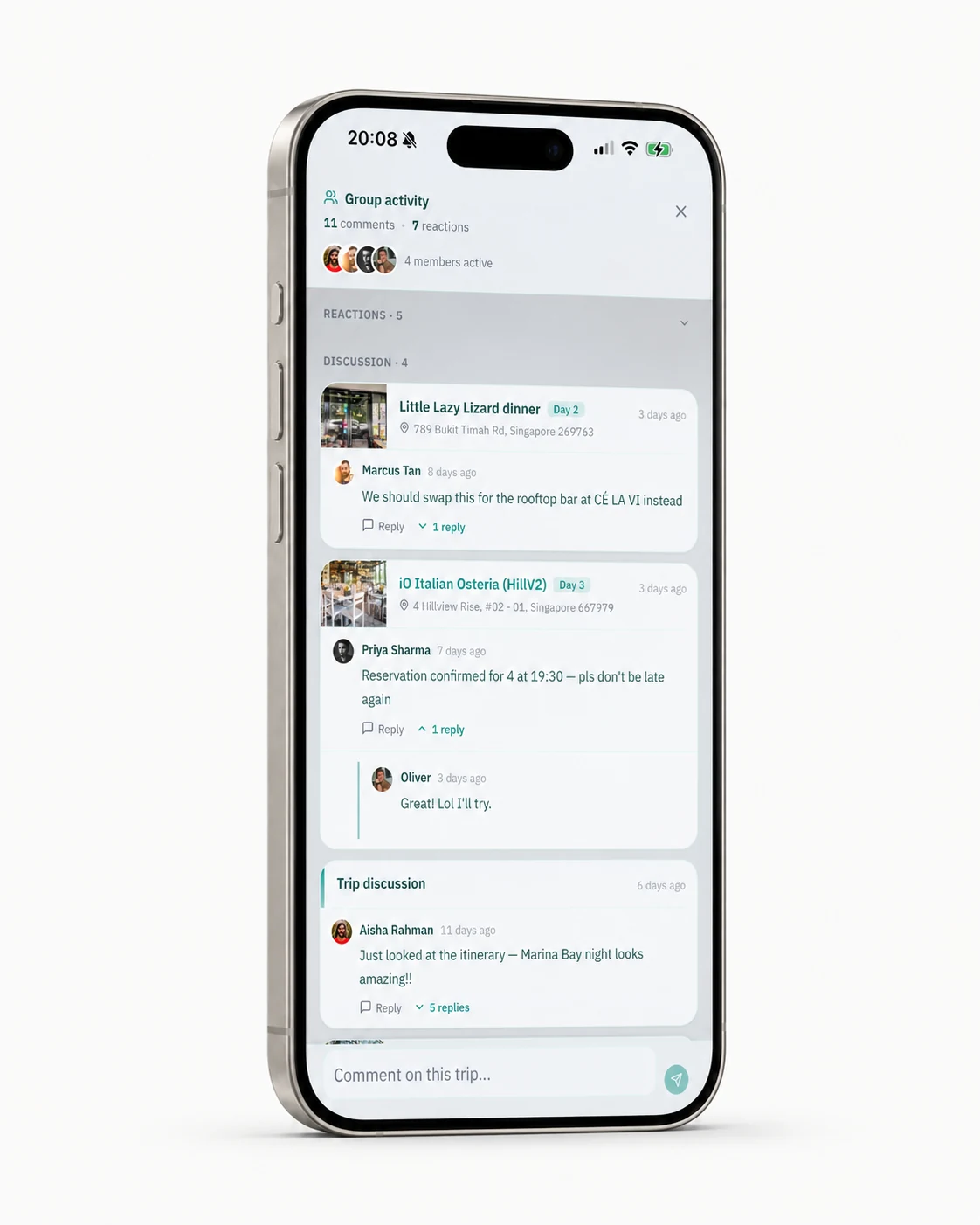
Comments, reactions and decisions sit on the actual itinerary item: venue, day, address. No parallel group chat that drifts away from the plan.
Everything you need to plan, book and remember the trip, in one place.