

Giza Plateau and Saqqara
Sunrise at the Pyramids before tour buses arrive, then the Step Pyramid of Djoser and the painted tombs at Saqqara.
Photo by Jordi Orts Segalés on Unsplash
Seven days tracing the Nile from Cairo's car-horn clamor to the sandstone hush of Aswan, where felucca sails snap against a dry desert wind that carries the faint smell of cardamom from riverside cafés.
Junto AI builds your full itinerary around your dates, your group and the way you like to travel.
Sunrise at the Pyramids before tour buses arrive, then the Step Pyramid of Djoser and the painted tombs at Saqqara.
Photo by Jordi Orts Segalés on Unsplash

Valley of the Kings, Hatshepsut's terraced temple at Deir el-Bahari, and the Colossi of Memnon in early morning light.
Photo by Fatih Beki on Unsplash

Coppersmiths, mosques of Al-Muizz Street, and mint tea at Fishawi's, the 18th-century café still open past midnight.
Photo by Dave Meckler on Unsplash

A 4x4 run from Bahariya Oasis to camp among chalk rock formations carved by wind, with fennec foxes circling at dusk.
Photo by hany mohamed on Unsplash

Felucca sailing past Elephantine Island, the Nubian village of Gharb Soheil, and Isis's temple reached by motorboat.
Photo by Dmitrii Zhodzishskii on Unsplash

Ramses II's rock-cut colossi facing the rising sun across Lake Nasser, best photographed in the first hour after opening.
Photo by Shreyas Nair on Unsplash
Egypt in a week is a logistical puzzle that rewards a flight or two. Cairo gets you in the door with the Pyramids and the new Grand Egyptian Museum, but the country's pull is the long stretch of Nile south of it, where temple walls still hold their pigment and the river does most of the moving for you. Seven days is enough to hit the headline sites without spending every afternoon in a minivan, provided you book the EgyptAir hop down to Luxor or Aswan early.
Start in Cairo with two nights. The Grand Egyptian Museum near Giza now holds Tutankhamun's full collection, and you can pair a morning there with an afternoon at Saqqara, quieter than Giza and home to some of the oldest stone architecture on earth. Evenings belong to Islamic Cairo: Al-Azhar Park at sunset, then dinner at Abou Tarek for koshari, the lentil-rice-pasta tangle Egyptians eat standing up. Fly south next. Luxor's East Bank holds Karnak's hypostyle hall and Luxor Temple lit gold after dark; the West Bank needs a full day for the Valley of the Kings and Hatshepsut's temple. A Nile cruise or a fast train carries you on to Aswan for feluccas, Philae, and a pre-dawn convoy to Abu Simbel.
For a photography-leaning detour, swap one Nile day for an overnight in the White Desert from Bahariya Oasis. The wind-carved chalk towers at moonrise are one of the more surreal things in North Africa.
Mid-range here stretches further than most travelers expect. Expect to pay around 80 to 150 USD a night for places like the Steigenberger in Cairo or the Sofitel Old Cataract in Aswan during shoulder season. October through April is the window; summer in Upper Egypt regularly clears 40°C. Carry small bills for baksheesh, dress modestly at mosques, and hire a licensed Egyptologist guide for at least the Luxor day. It changes what you see.
From the first idea to settling up at the end, Junto handles the planning so you don't have to be the group's travel agent.
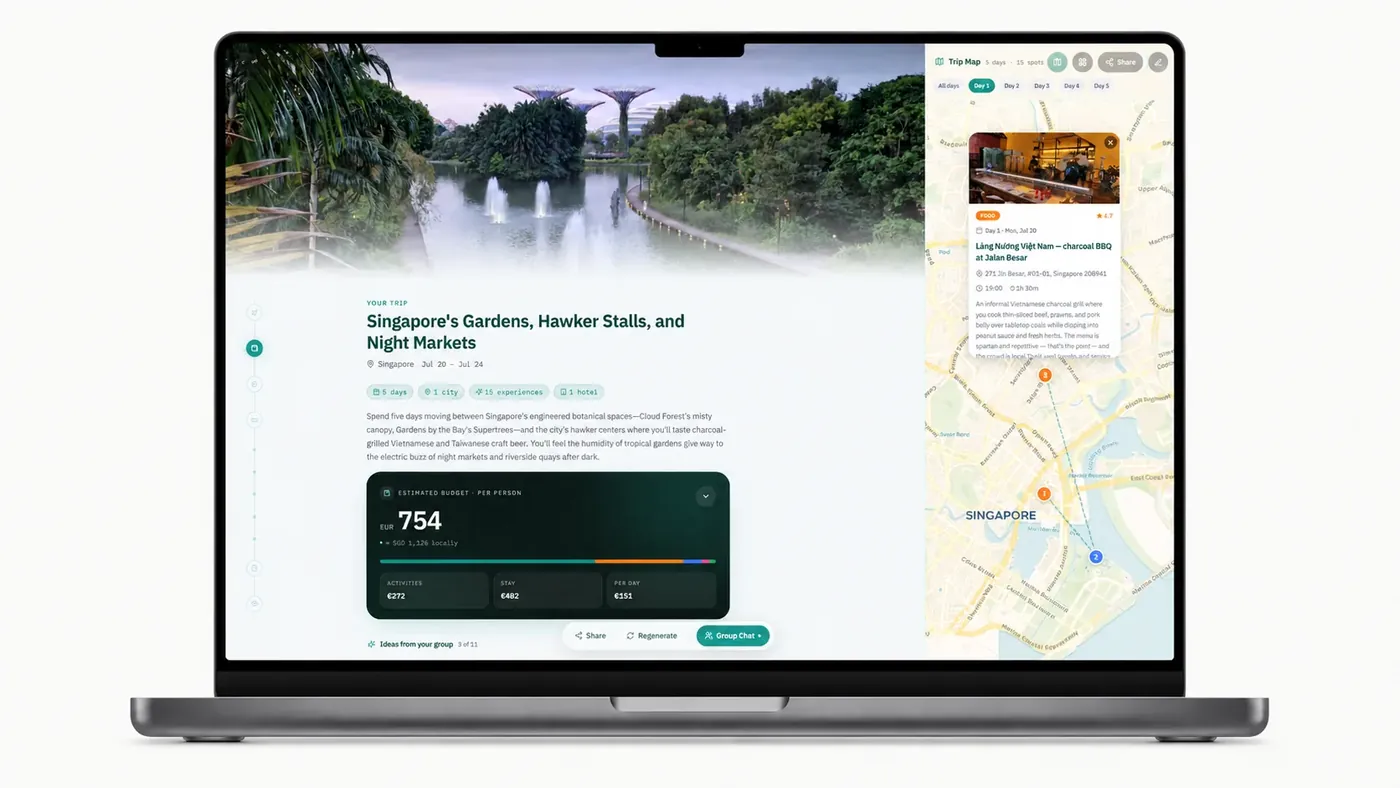
Junto AI maps every day to your pace, dates and the people you're with, with venues, timings and a real route you can actually follow.
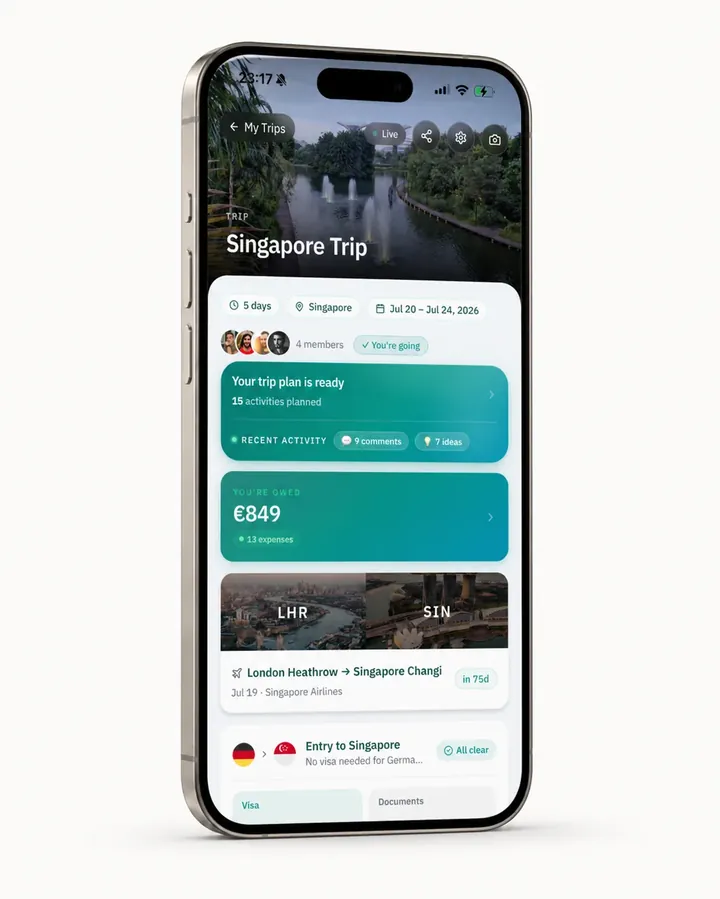
Dates, crew, flights, expenses and entry requirements all in one dashboard, so nothing falls through the cracks.
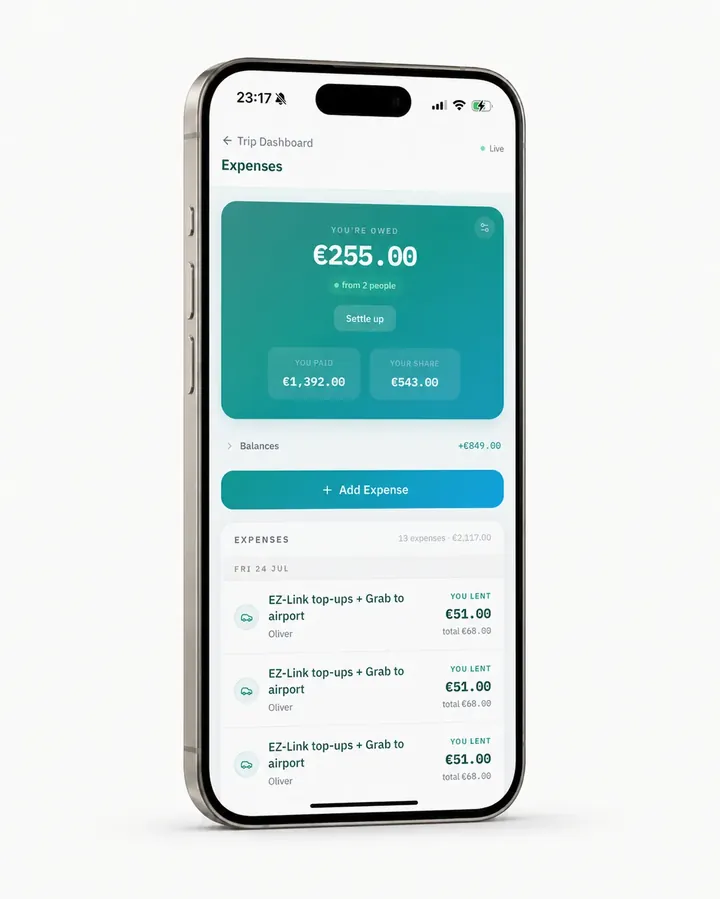
Track every shared expense and let Junto figure out who owes what. No spreadsheets, no awkward Venmos.
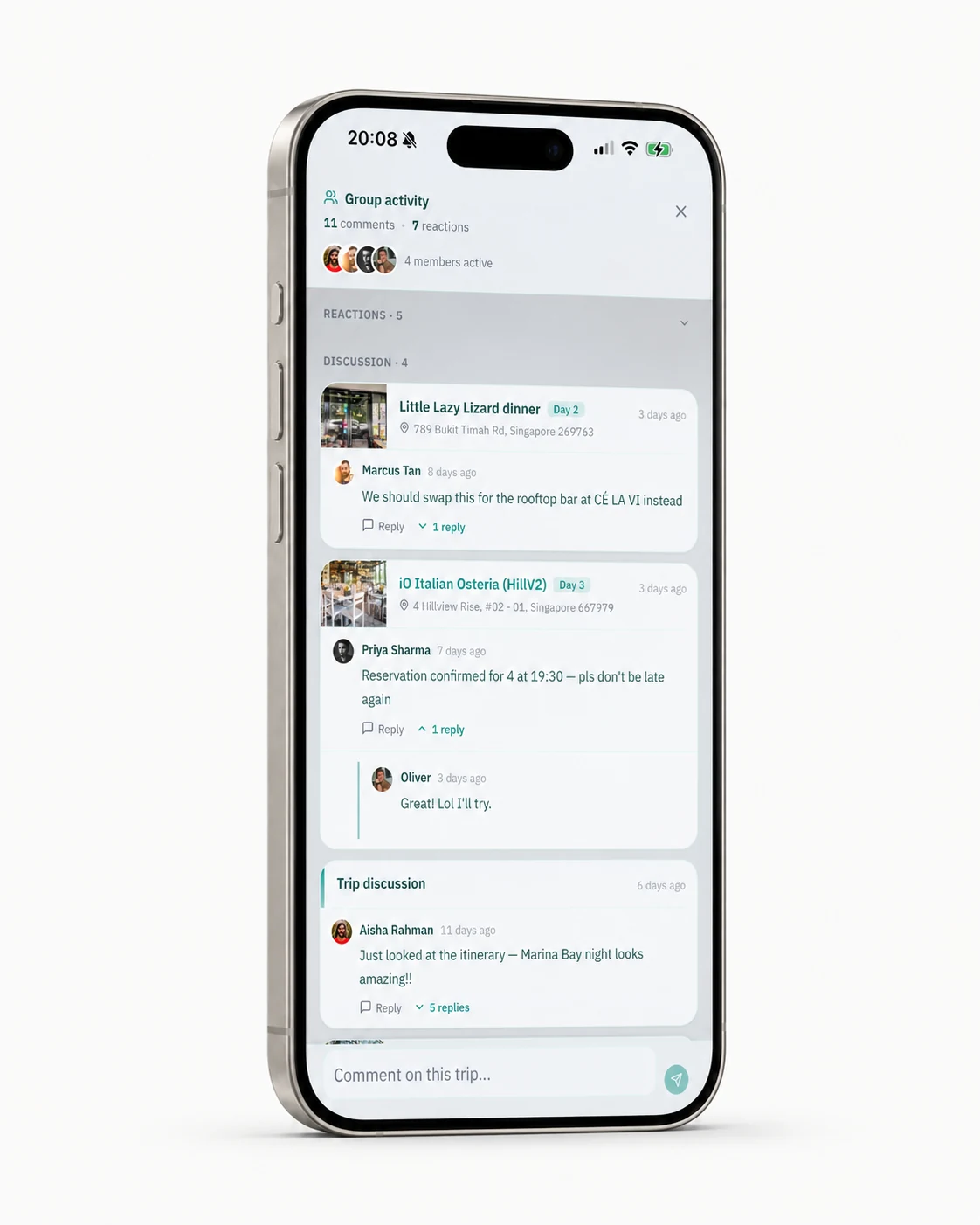
Comments, reactions and decisions sit on the actual itinerary item: venue, day, address. No parallel group chat that drifts away from the plan.
Everything you need to plan, book and remember the trip, in one place.