

Fushimi Inari at Dawn
Climb the vermilion torii tunnels before 7am, when the mountain paths empty out and fox shrines glow in low light.
Photo by David Emrich on Unsplash
Seven slow days in Kyoto, where temple bells carry across tile rooftops at dawn and the smell of grilled mochi drifts out of Nishiki Market alleys. A city built for unhurried looking.
Junto AI builds your full itinerary around your dates, your group and the way you like to travel.
Climb the vermilion torii tunnels before 7am, when the mountain paths empty out and fox shrines glow in low light.
Photo by David Emrich on Unsplash

Pair the bamboo grove with the Zen garden at Tenryu-ji, then cross Togetsukyo Bridge for soba lunch in Saga.
Photo by Fynn Geerdsen on Unsplash

Photograph wooden machiya facades along Hanamikoji, then eat yakitori in the lantern-lit alley of Pontocho.
Photo by Transly Translation Agency on Unsplash

Five blocks of pickle vendors, tako tamago, yuba, and tofu donuts that double as a primer on Kyoto cuisine.
Photo by Jean-Claude Dumont on Unsplash

Walk the canal from Ginkaku-ji to Nanzen-ji, stopping at Honen-in and Eikan-do for moss gardens and quiet halls.
Photo by Dmitry Romanoff on Unsplash

Book one multi-course kaiseki and one casual obanzai counter to taste Kyoto's tofu, yuba, and seasonal vegetable traditions.
Photo by Yosuke Ota on Unsplash
Kyoto rewards patience. Seven days is enough to stop chasing checklists and start noticing things: the way moss creeps up a temple wall in Higashiyama, the rhythm of a tea whisk at a Daitoku-ji sub-temple, the late-afternoon light that turns the Kamogawa River silver. The city has more than 1,600 Buddhist temples and 400 Shinto shrines, and you will not see them all. The point is to pick a few neighborhoods and walk them properly.
Spend your first days east of the river. Higashiyama's lanes (Ninenzaka, Sannenzaka) lead up to Kiyomizu-dera, and the Philosopher's Path links Ginkaku-ji to Nanzen-ji through a corridor of cherry trees and small canal-side cafes. Devote a full morning to Fushimi Inari before the crowds, and a full day to Arashiyama on the western edge, where Tenryu-ji's borrowed-scenery garden and the Okochi Sanso villa anchor a quieter side of the city. Save an afternoon for northern Kyoto: Kinkaku-ji, then Ryoan-ji's rock garden, then a slow bus ride back through Murasakino.
Food deserves its own day. Start at Nishiki Market for tsukemono and grilled eel, work through tofu lunch at a Nanzen-ji yudofu house, and finish with one proper kaiseki dinner. Counter spots in Pontocho and Kiya-machi handle the casual end, with yakitori, oden, and obanzai sets under 4,000 yen.
Stay in a machiya rental in Nakagyo or a mid-range ryokan with breakfast included. The subway and bus network covers most of the city; rent a bike for flat neighborhoods. April and November book out a year ahead, so target late May, early June, or October for fewer crowds and good light.
From the first idea to settling up at the end, Junto handles the planning so you don't have to be the group's travel agent.
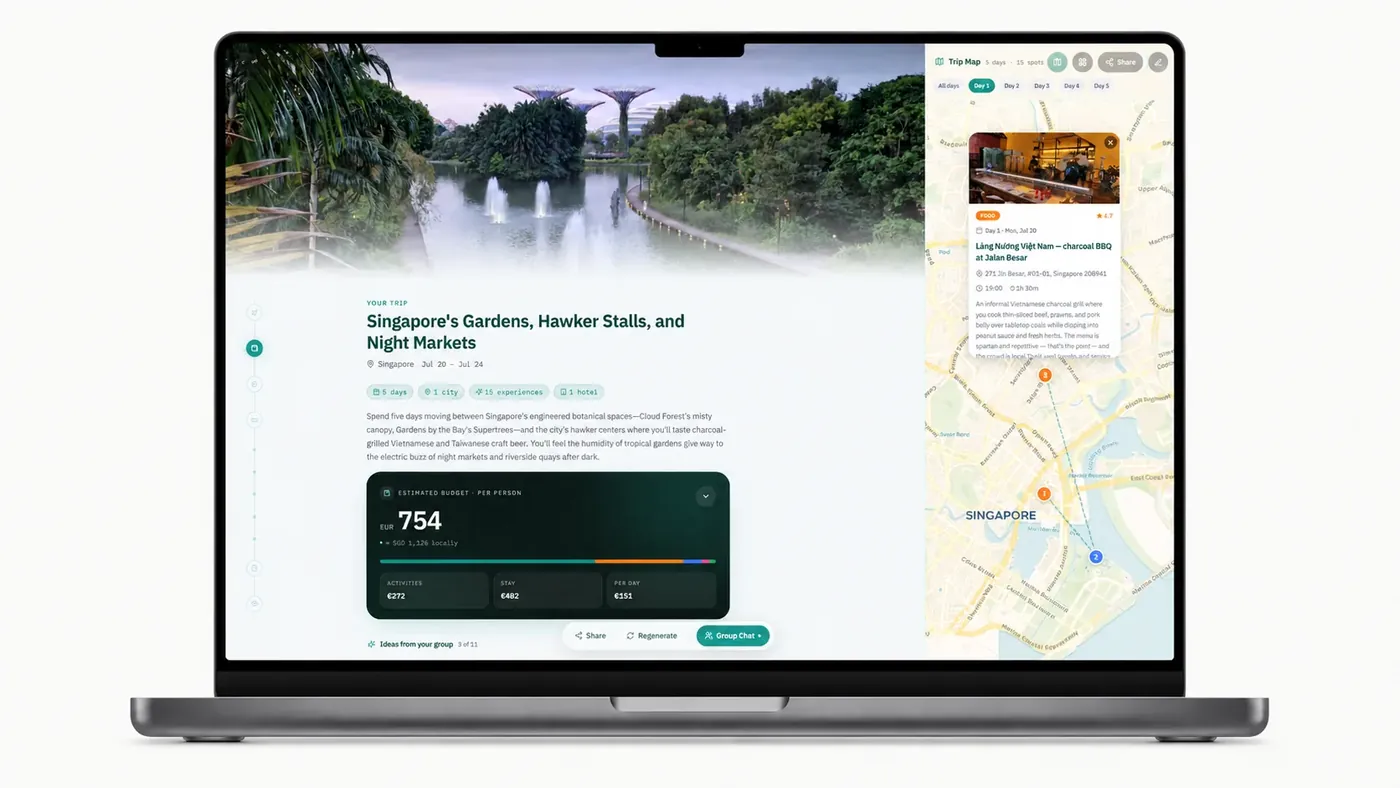
Junto AI maps every day to your pace, dates and the people you're with, with venues, timings and a real route you can actually follow.
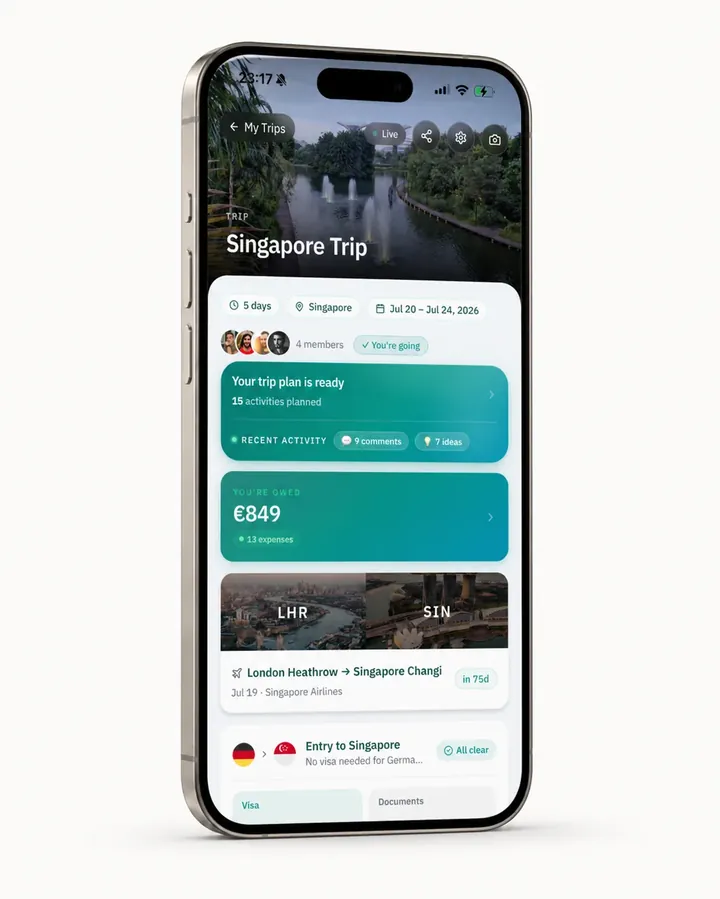
Dates, crew, flights, expenses and entry requirements all in one dashboard, so nothing falls through the cracks.
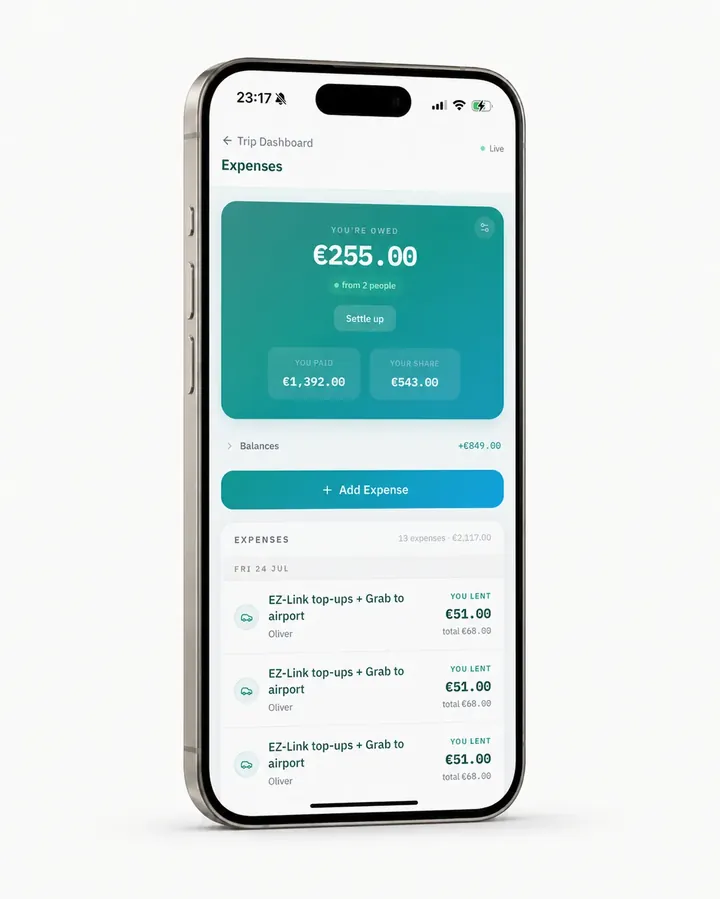
Track every shared expense and let Junto figure out who owes what. No spreadsheets, no awkward Venmos.
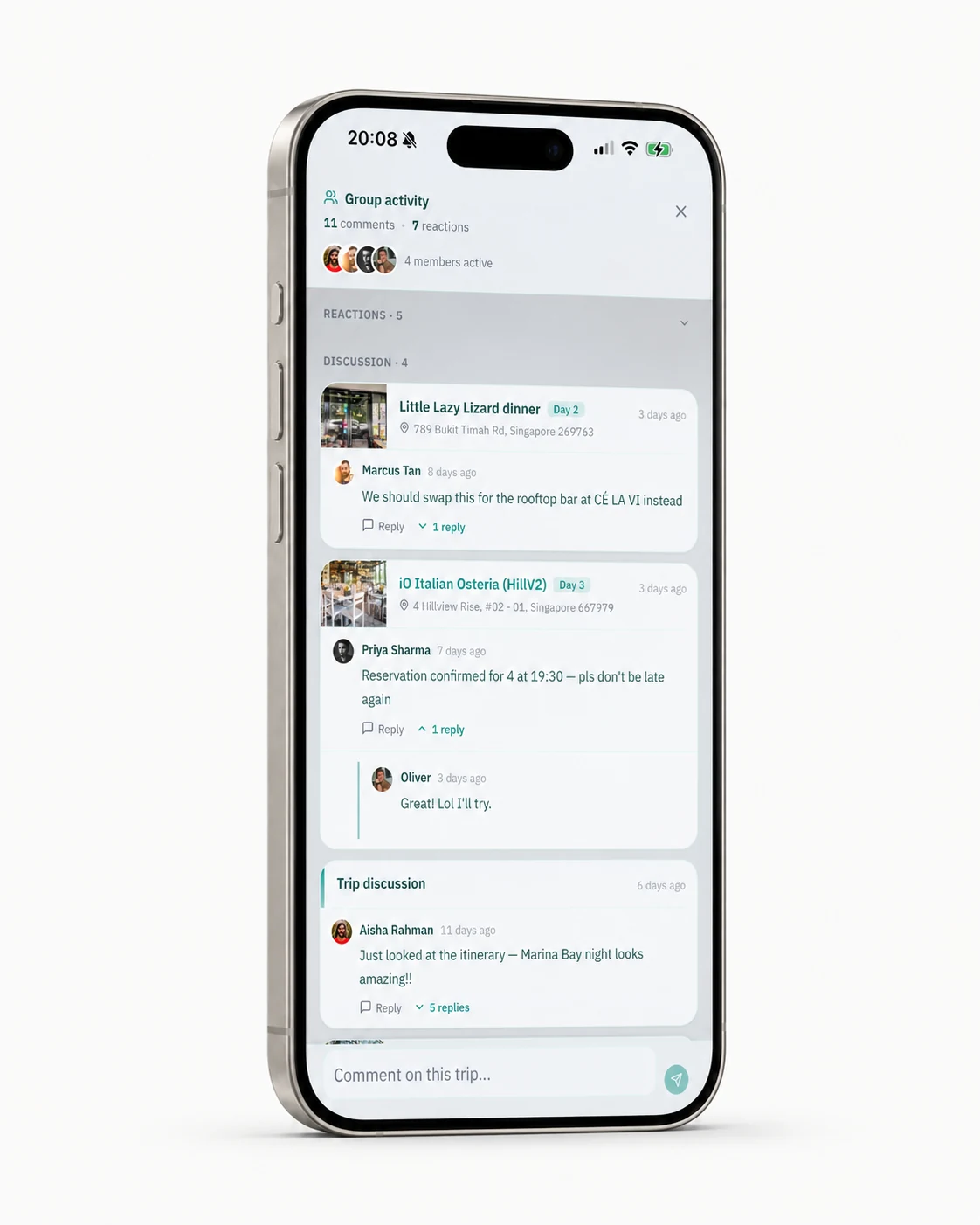
Comments, reactions and decisions sit on the actual itinerary item: venue, day, address. No parallel group chat that drifts away from the plan.
Everything you need to plan, book and remember the trip, in one place.