

Overwater Villas in the Baa Atoll
Private decks with glass floors and direct lagoon access, concentrated around UNESCO-protected Hanifaru Bay and Soneva Fushi.
Photo by Matheen Faiz on Unsplash
Five days where the loudest sound is a reef shark's tail flicking past your ladder. The Maldives runs on tide charts and sunset cocktails, with water so clear your shadow tracks you across the sand fifteen feet below.
Junto AI builds your full itinerary around your dates, your group and the way you like to travel.
Private decks with glass floors and direct lagoon access, concentrated around UNESCO-protected Hanifaru Bay and Soneva Fushi.
Photo by Matheen Faiz on Unsplash

From May to November, plankton blooms draw dozens of mantas and whale sharks into a single shallow cove.
Photo by Enrique Ortega Miranda on Unsplash

Resorts ferry guests to bare crescents of sand for champagne lunches with no structures, no shade, no neighbors.
Photo by Lucy Green on Unsplash

Traditional wooden boats run dolphin-spotting circuits at golden hour through the South Malé Atoll channels.
Photo by Nik Schmidt on Unsplash

Glass-tunnel restaurants serve tasting menus five meters below the surface while reef fish drift past the curved ceiling.
Photo by Ishan @seefromthesky on Unsplash

On moonless nights, dinoflagellates light the shoreline blue with each breaking wave, peaking from July to February.
The Maldives is 1,200 islands strung across the equator, and only about 200 are inhabited. Roughly a third of those are single-resort islands, which means your five days here unfold on one patch of reef-fringed sand with a seaplane ride bookending the trip. This is not a country you tour. You pick an atoll, settle in, and let the days organize themselves around tide tables, dive schedules, and the angle of the sun.
Most luxury travelers base in the Baa Atoll or the North Malé Atoll. Baa is the move for marine life, particularly Hanifaru Bay during manta season, with Soneva Fushi and Four Seasons Landaa Giraavaru as the anchor properties. North Malé is closer to the airport and home to names like Four Seasons Kuda Huraa and One&Only Reethi Rah. Further north, Noonu Atoll holds Cheval Blanc Randheli and Velaa, both worth the longer transfer for the privacy. Further south, the Ari Atoll delivers reliable whale shark sightings year-round along its western edge. Photographers should plan around the blue hour: the lagoon water shifts from turquoise to mercury in about twenty minutes after sunset.
Days here move slowly on purpose. A morning snorkel off the house reef, lunch flown in from the resort's Japanese counter, an afternoon at the overwater spa, sunset on a dhoni with a thermos of cold karkadeh tea. Dinner might be on a sandbank, in an underwater dining room, or at a chef's table where the catch was speared that morning. Mas huni, the shredded tuna and coconut breakfast, is worth requesting even at properties that default to continental.
Practicalities: the dry season runs December to April, with calmer water and clearer visibility. May to November brings manta aggregations and lower rates. Seaplane transfers only operate in daylight, so afternoon arrivals into Velana International often mean an overnight in Malé. Pack reef-safe sunscreen; many resorts confiscate the rest at check-in.
From the first idea to settling up at the end, Junto handles the planning so you don't have to be the group's travel agent.
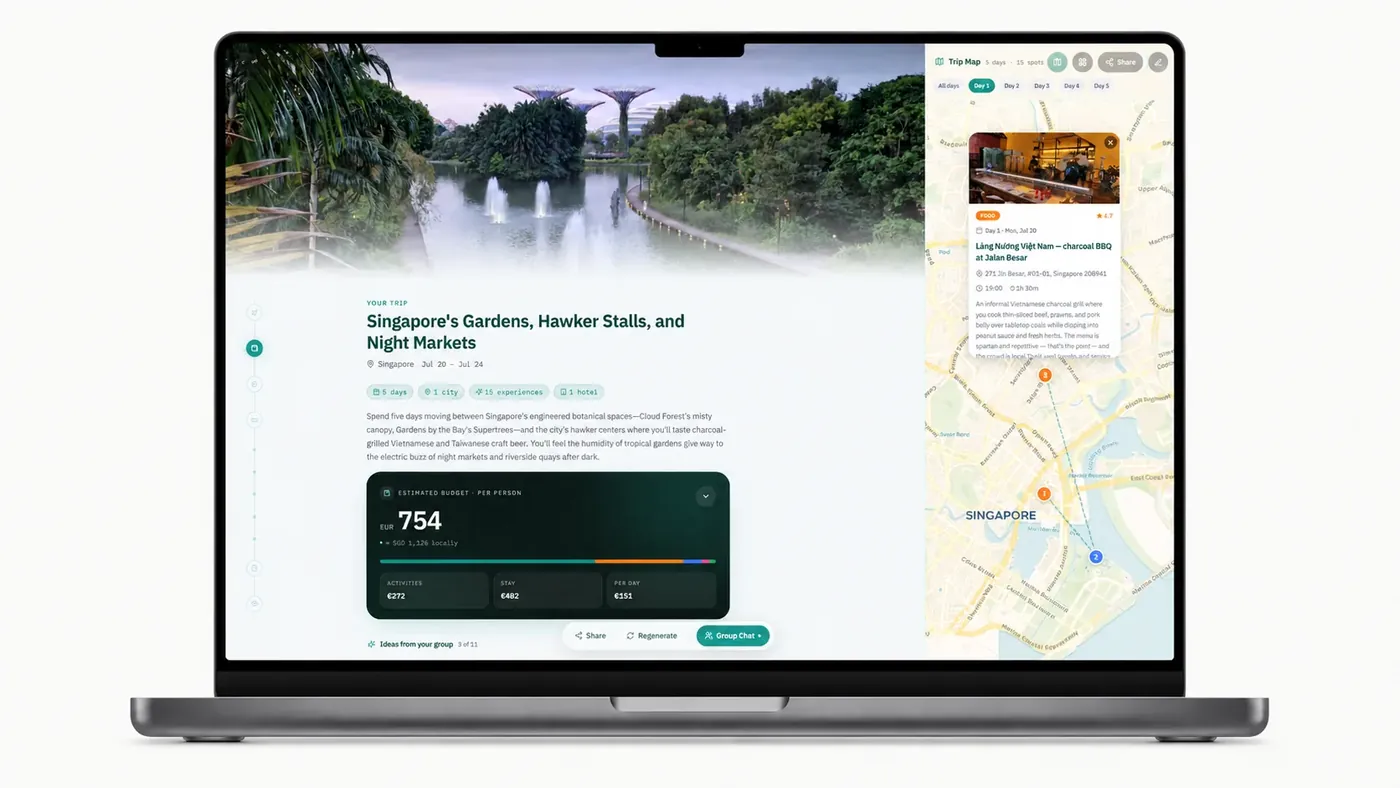
Junto AI maps every day to your pace, dates and the people you're with, with venues, timings and a real route you can actually follow.
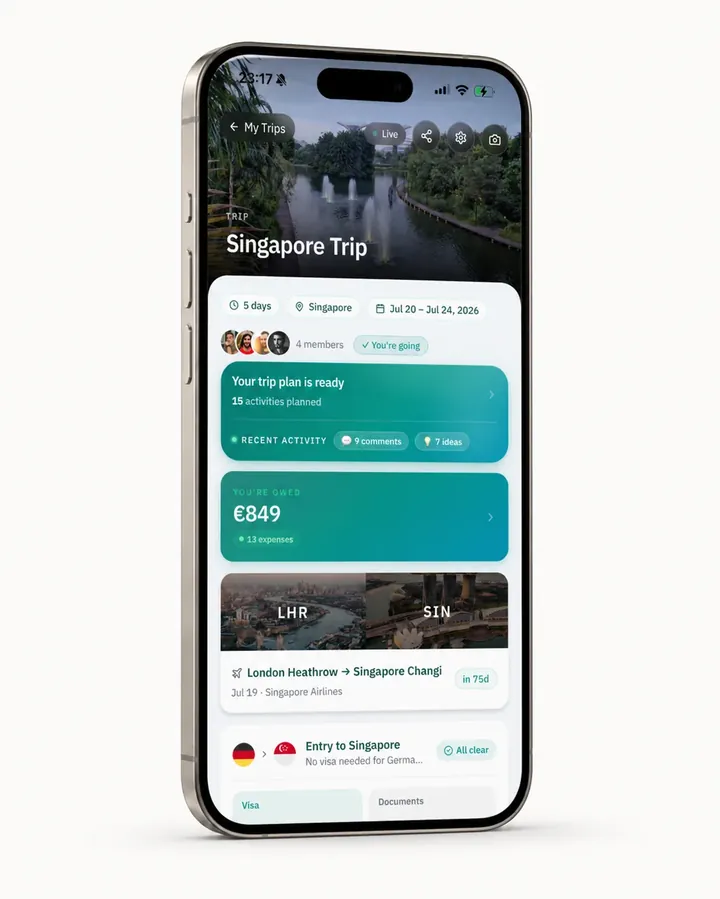
Dates, crew, flights, expenses and entry requirements all in one dashboard, so nothing falls through the cracks.
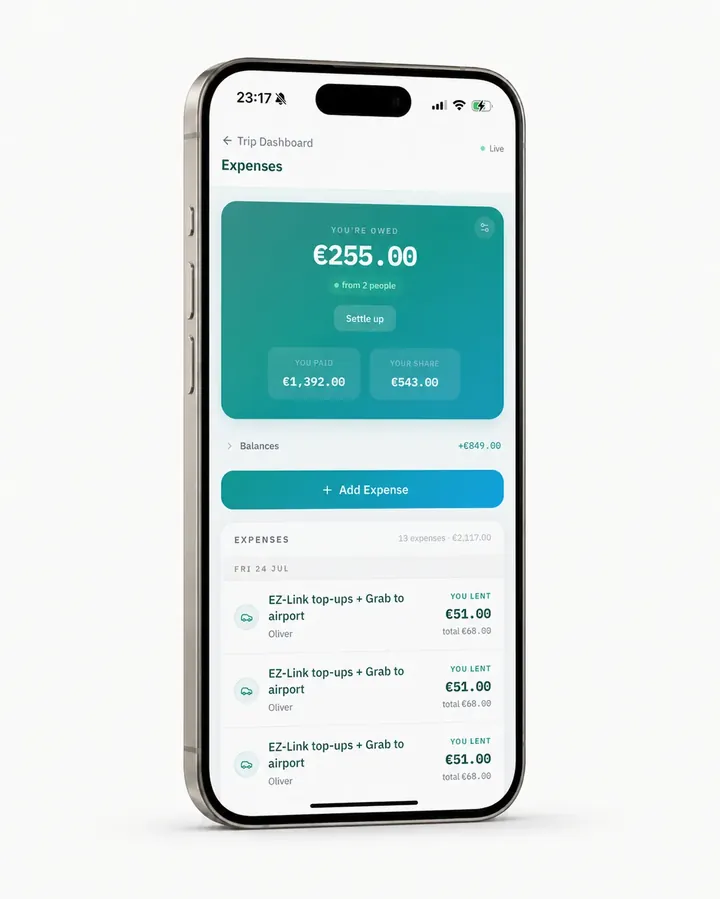
Track every shared expense and let Junto figure out who owes what. No spreadsheets, no awkward Venmos.
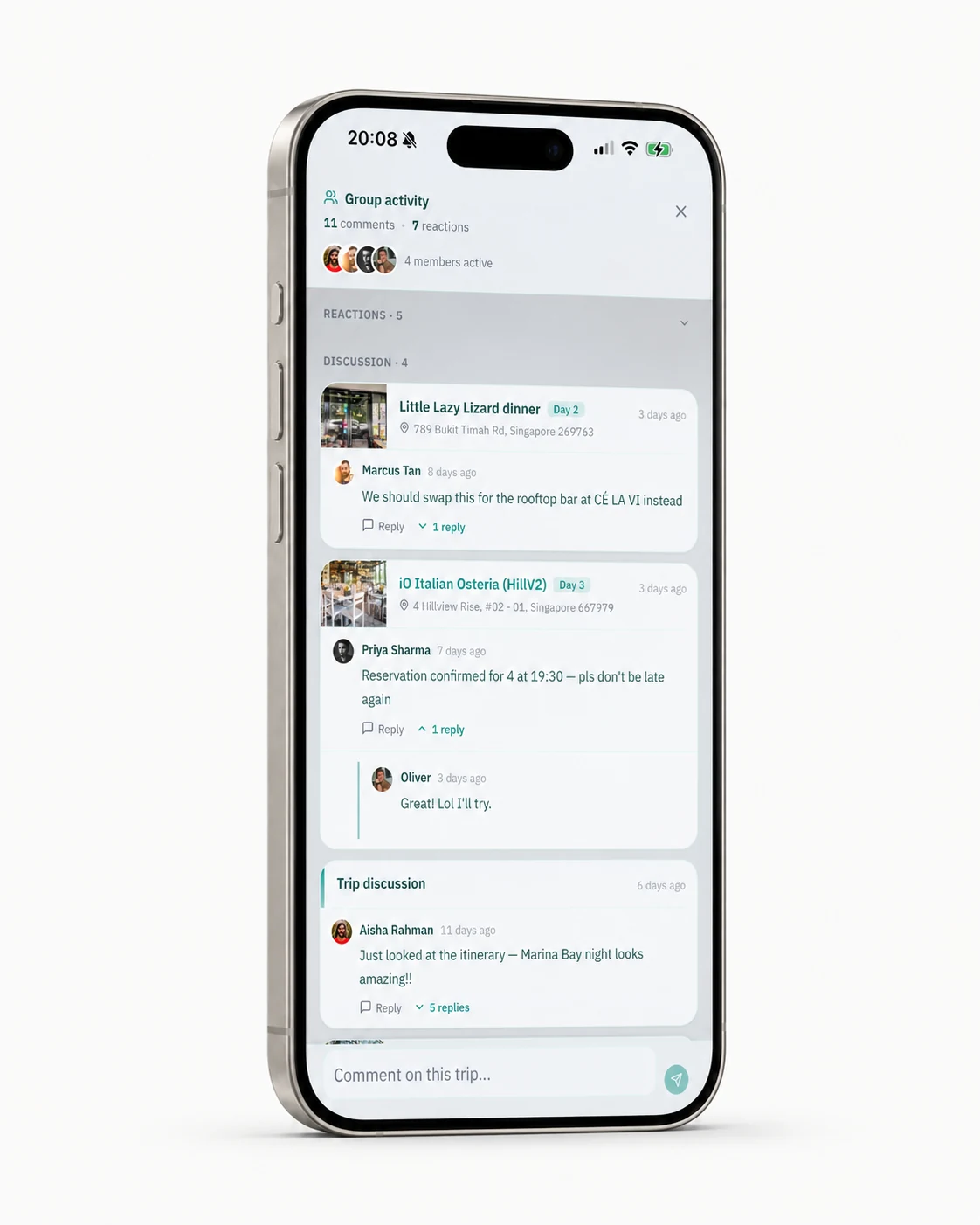
Comments, reactions and decisions sit on the actual itinerary item: venue, day, address. No parallel group chat that drifts away from the plan.
Everything you need to plan, book and remember the trip, in one place.