

Marrakech's Jemaa el-Fnaa & Souks
Snake charmers at sunset, orange juice carts, and the leather, spice, and lantern souks fanning out from the square.
Mint tea steams in tiny glasses while donkeys clatter through medina alleys narrower than your shoulders. Six days in Morocco moves between Atlantic wind, Atlas snow, and the hush of red dunes at dusk.
Junto AI builds your full itinerary around your dates, your group and the way you like to travel.
Snake charmers at sunset, orange juice carts, and the leather, spice, and lantern souks fanning out from the square.

Walk the Chouara tanneries, the Al-Qarawiyyin library, and 9,000 alleys best navigated with a local guide.
Photo by Women Travel Abroad on Unsplash

Camel trek from Merzouga into the dunes, sleep in a Berber tent, photograph the Milky Way over the sand.
Photo by John Moeses Bauan on Unsplash

Drive the Tizi n'Tichka pass to the ksar where Gladiator filmed, with Berber village stops along the way.
Photo by Aleksander Stypczynski on Unsplash

The Rif Mountain town painted every shade of indigo, easiest to shoot in early morning before tour buses arrive.
Photo by Zarouri Hicham on Unsplash

Portuguese ramparts, gnawa music, grilled sardines at the port, and steady wind that keeps the medina cool.
Photo by Evgeny Matveev on Unsplash
Morocco compresses three continents of texture into a country the size of California. In six days you can move from the snow line of the High Atlas to Saharan dunes, from Atlantic fishing ports to medieval medinas where the call to prayer bounces off tile walls. A balanced pace means picking two or three anchors rather than chasing the whole map. Most trips start in Marrakech or Fes and loop south, since the desert is the experience that pulls hardest on a short itinerary.
Marrakech earns its reputation in Jemaa el-Fnaa after dark, when food stalls fire up and gnawa drummers compete with storytellers. Spend a morning in the Bahia Palace and the Saadian Tombs, then get properly lost in the souks around Rahba Kedima. From here, the classic three-day desert loop crosses the Tizi n'Tichka pass to Aït Benhaddou, overnights in the Dades or Todra gorges, and ends with a camel ride into Erg Chebbi at Merzouga. The drive is long but the landscape pays back every kilometer.
If your priorities lean cultural, swap the desert for Fes and Chefchaouen. Fes el-Bali is the most intact medieval city in the Arab world, and a guide is genuinely useful for the tanneries and the maze around Al-Qarawiyyin. Chefchaouen, four hours north, photographs best at 7 a.m. before the day-trippers arrive from Tangier.
Eat tagine, pastilla, and harira; the best meals are often at riads, the courtyard guesthouses that double as lodging in the 80 to 200 dollar range. Book a riad inside the medina walls for atmosphere, outside for parking. Skip July and August in the south (over 110°F) and aim for March to May or September to November. CTM and Supratours buses are reliable; for the desert loop, hire a driver.
From the first idea to settling up at the end, Junto handles the planning so you don't have to be the group's travel agent.
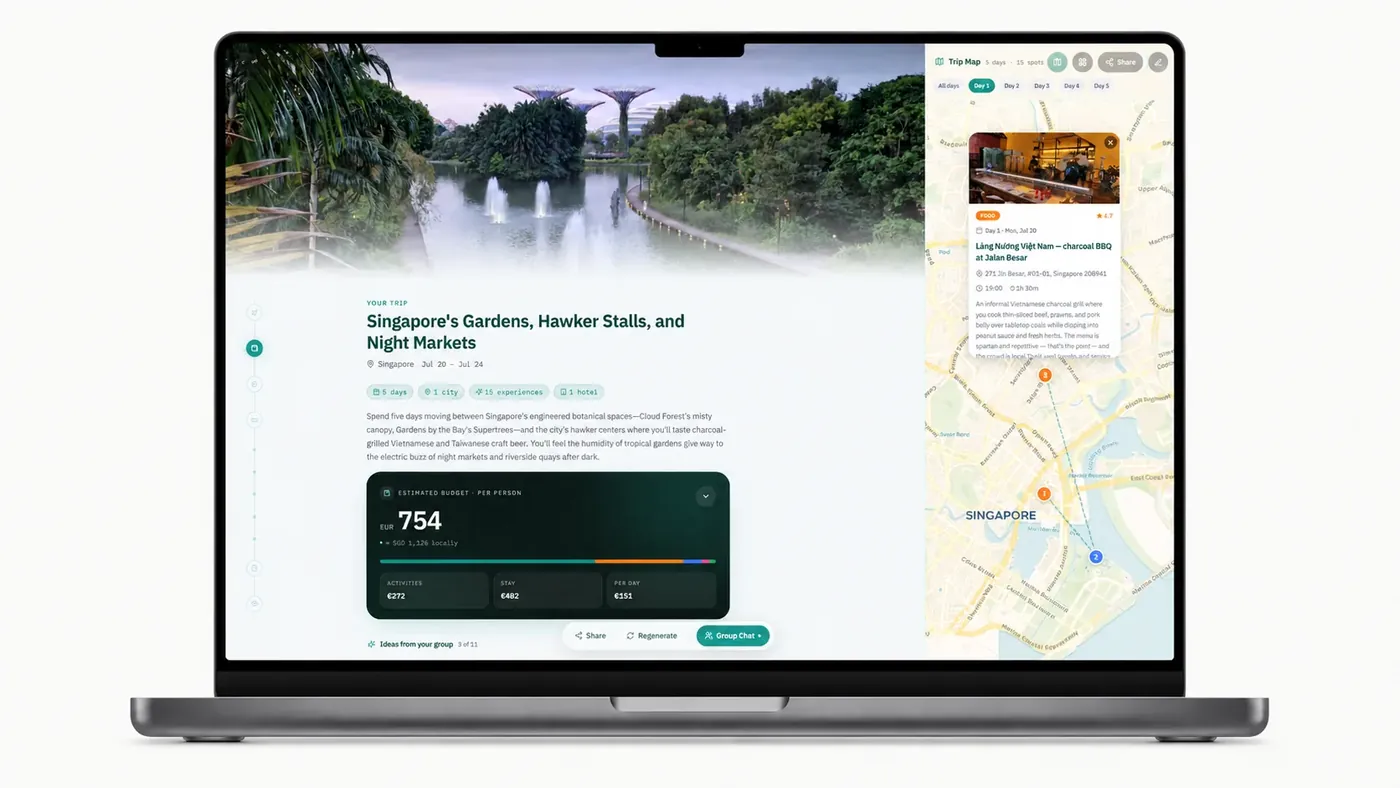
Junto AI maps every day to your pace, dates and the people you're with, with venues, timings and a real route you can actually follow.
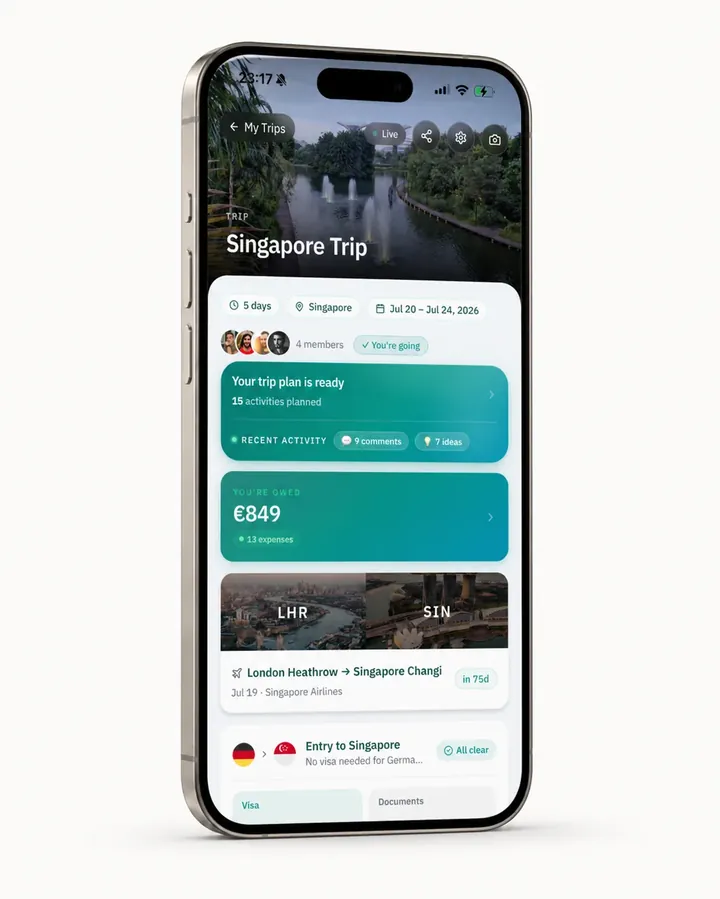
Dates, crew, flights, expenses and entry requirements all in one dashboard, so nothing falls through the cracks.
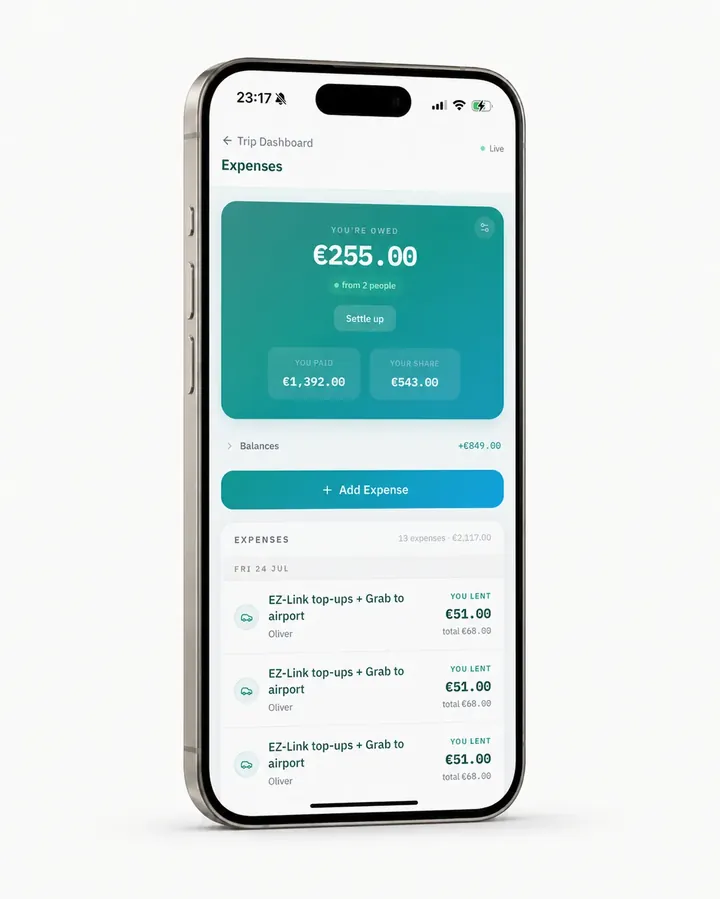
Track every shared expense and let Junto figure out who owes what. No spreadsheets, no awkward Venmos.
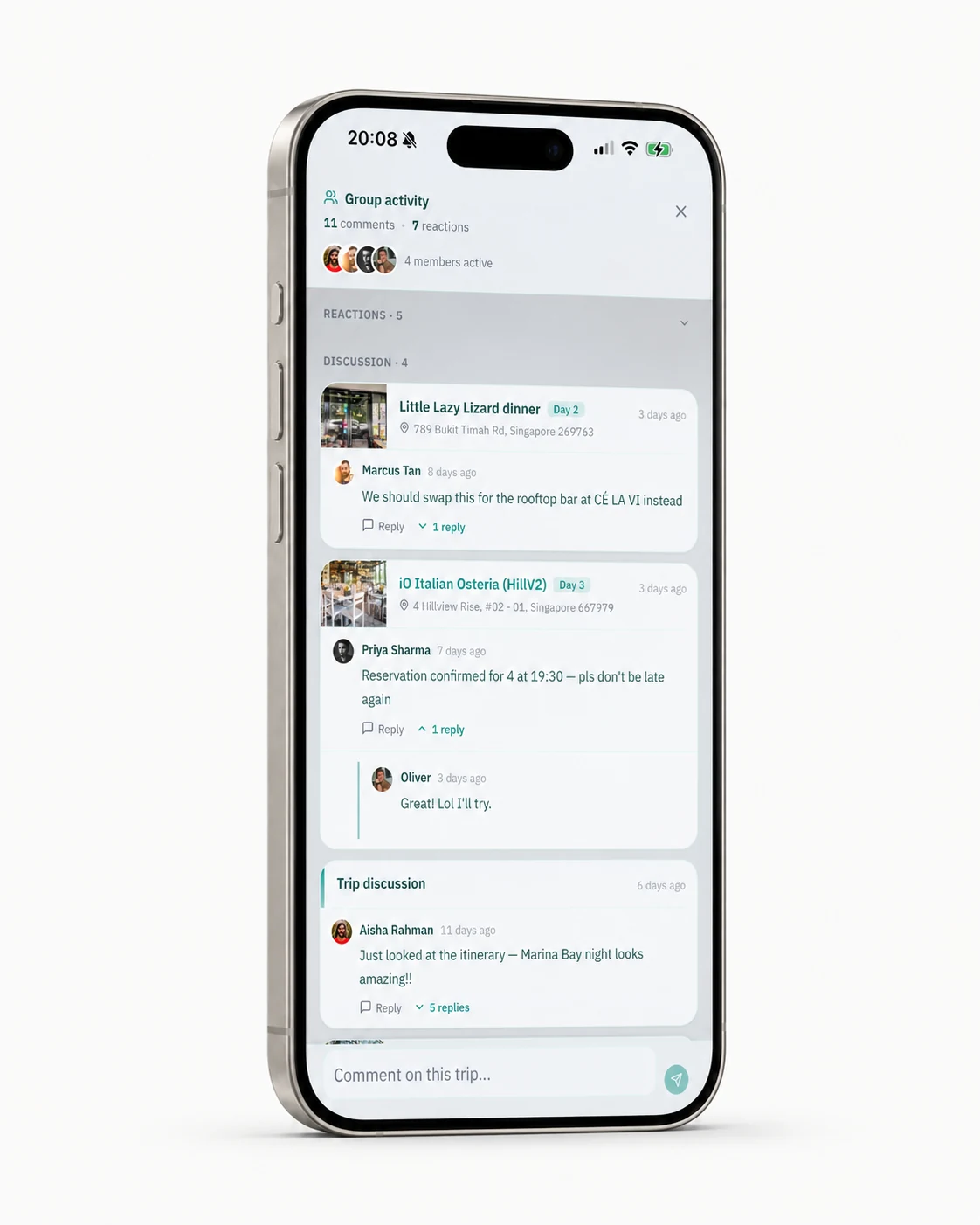
Comments, reactions and decisions sit on the actual itinerary item: venue, day, address. No parallel group chat that drifts away from the plan.
Everything you need to plan, book and remember the trip, in one place.