
Neon Nights in Shibuya
The world's busiest crossing, izakayas tucked into back-alleys and karaoke until sunrise.
10 days · March–May
A city of paradoxes, neon-soaked crossings and quiet shrines, vending-machine ramen and three-Michelin-star sushi. Ten days here is barely enough.
Junto AI builds your full itinerary around your dates, your group and the way you like to travel.
The world's busiest crossing, izakayas tucked into back-alleys and karaoke until sunrise.

Meiji Jingu, Senso-ji and the small neighborhood shrines that hide between skyscrapers.

Counter sushi, hand-pulled ramen, conveyor-belt curiosities and convenience-store classics.

Vintage boutiques, cult sneaker drops and the most-photographed street fashion in the world.

Onsen, ryokan stays and a clear-day glimpse of Mt. Fuji from the lakeside.

Immersive digital worlds, contemporary galleries and the Mori at the top of Roppongi Hills.
Tokyo at ten days lets you stop sprinting. You can spend a morning watching octogenarian sushi chefs at Tsukiji's outer stalls, take the afternoon off in a Daikanyama bookstore, and still have time for an hour-long ramen queue in Shinjuku that night. The city rewards repetition: returning to the same neighborhood at a different hour reveals an entirely different place. Shibuya at 8 a.m. is salarymen and convenience-store coffee. Shibuya at 11 p.m. is the Scramble in full chaos and standing bars filling up along Nonbei Yokocho.
Build the trip in halves. Spend the first five days inside the JR Yamanote loop: Senso-ji and the knife shops on Kappabashi-dori, Meiji Jingu's gravel paths, the teamLab Planets installation in Toyosu, izakaya crawls through Ebisu Yokocho. Anchor one evening in Golden Gai, where each tiny bar has its own rules and regulars. Use the second half for slower districts. Yanaka and Nezu hold the prewar wooden Tokyo most travelers miss. Shimokitazawa runs on vintage shops and live houses. A day trip to Kamakura's Great Buddha or an afternoon at the Ghibli Museum in Mitaka breaks up the density.
Eat widely. Tonkatsu in Tonki, hand-pulled soba in Kanda, monjayaki in Tsukishima, conveyor sushi in any neighborhood you happen to be tired in. Department-store basements (depachika) at Isetan and Takashimaya solve lunch on travel days.
Mid-range lodging works best in Shinjuku, Ginza, or Asakusa, where business hotels run 15,000–25,000 yen a night with tiny but flawless rooms. Get a Suica card on arrival. Aim for late March cherry blossoms or early November ginkgo gold; avoid August humidity if you can.
From the first idea to settling up at the end, Junto handles the planning so you don't have to be the group's travel agent.
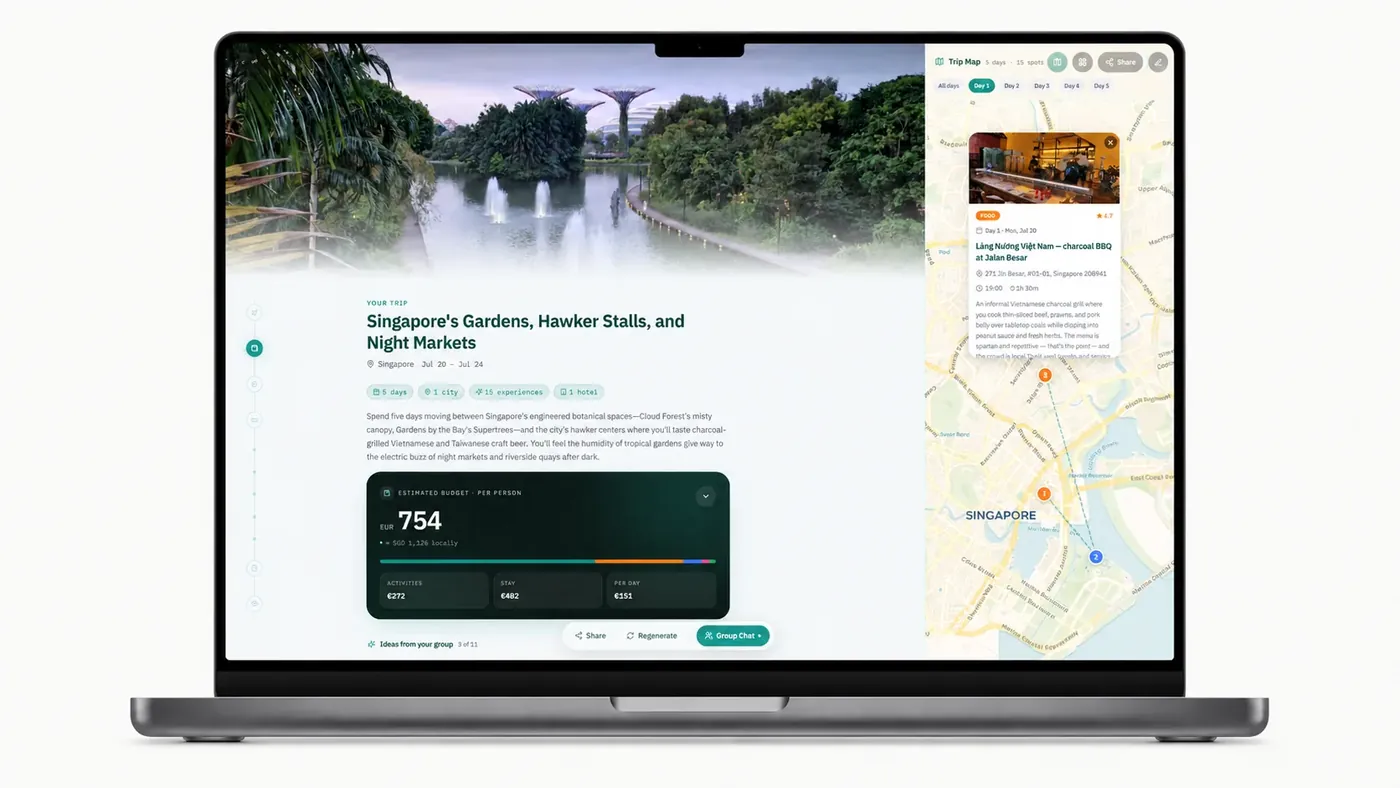
Junto AI maps every day to your pace, dates and the people you're with, with venues, timings and a real route you can actually follow.
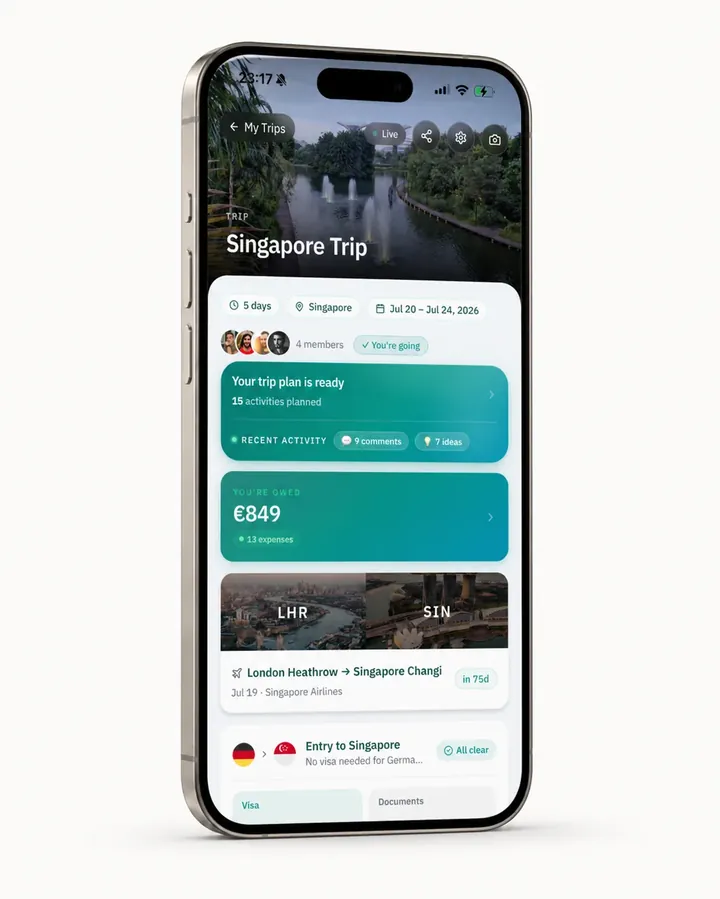
Dates, crew, flights, expenses and entry requirements all in one dashboard, so nothing falls through the cracks.
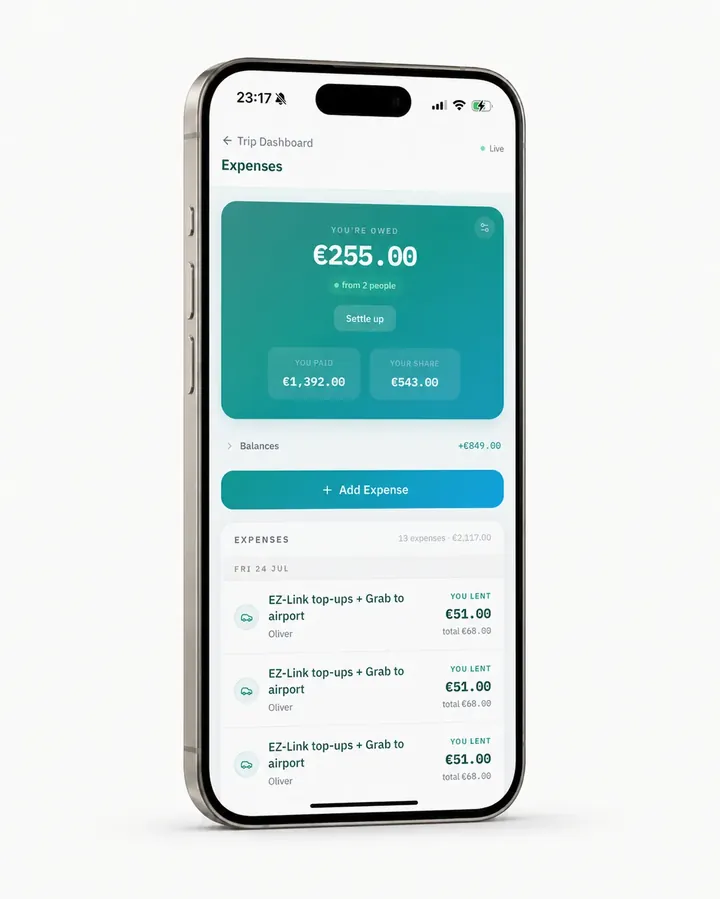
Track every shared expense and let Junto figure out who owes what. No spreadsheets, no awkward Venmos.
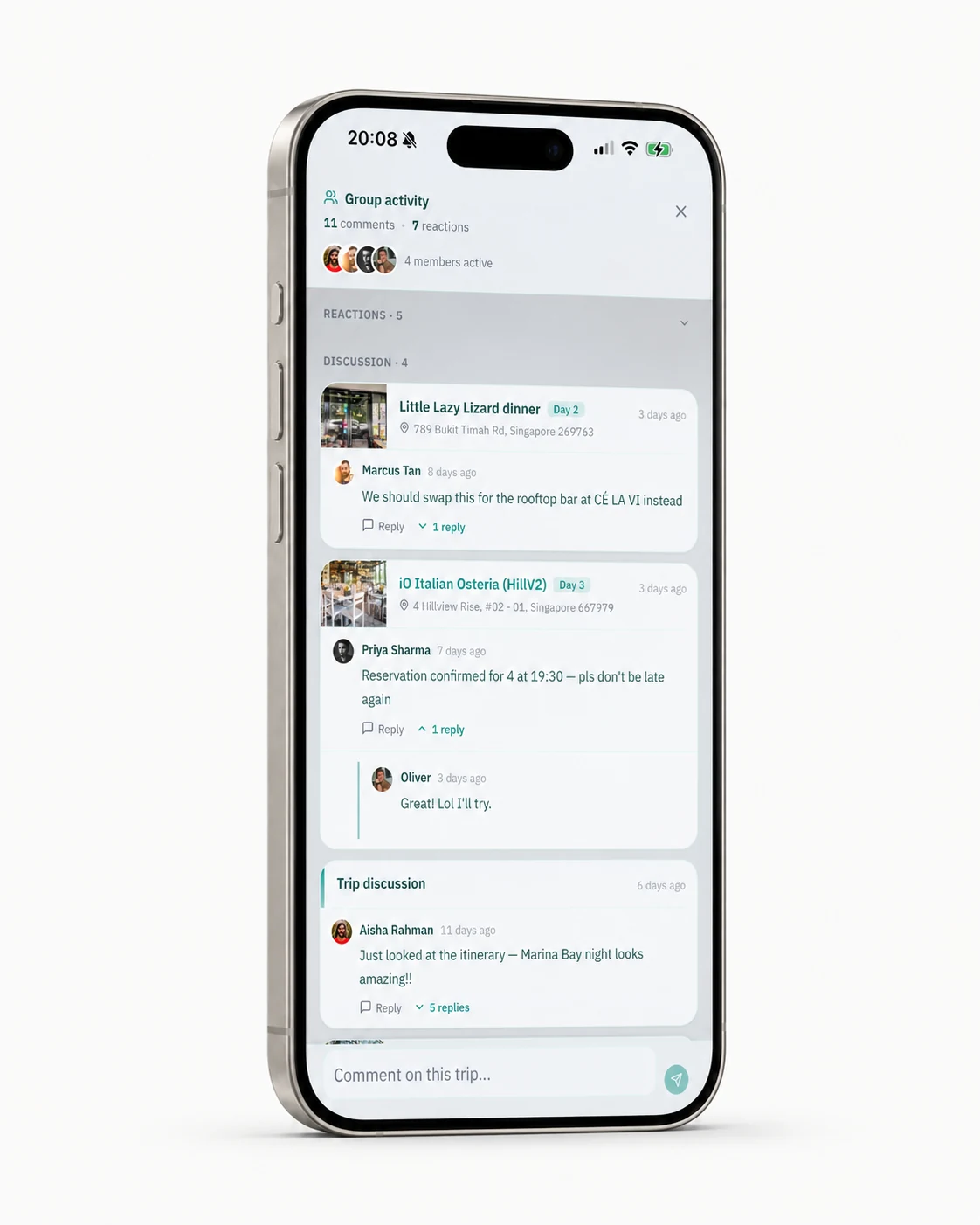
Comments, reactions and decisions sit on the actual itinerary item: venue, day, address. No parallel group chat that drifts away from the plan.
Everything you need to plan, book and remember the trip, in one place.