

Stone Town Alleys and Forodhani Gardens
Wander Stone Town's carved doors and Omani forts, then graze night-market grills for Zanzibar pizza and sugarcane juice.
Photo by Anastasiya Badun on Unsplash
Cloves drying on rooftops, dhows tipping into the Indian Ocean, coral-stone alleys that smell like cardamom and sea salt. Zanzibar runs on monsoon time, and six days is enough to slow your pulse to match.
Junto AI builds your full itinerary around your dates, your group and the way you like to travel.
Wander Stone Town's carved doors and Omani forts, then graze night-market grills for Zanzibar pizza and sugarcane juice.
Photo by Anastasiya Badun on Unsplash

The northern tip holds the island's calmest tides, powdery sand, and sunset dhow cruises off Kendwa's reef.
Photo by MARIOLA GROBELSKA on Unsplash

A morning walk through mahogany and mangrove boardwalks to spot the endemic Zanzibar red colobus monkey troops.
Photo by Aron Marinelli on Unsplash

Pick cloves, nutmeg, and vanilla pods at a working farm, then eat a Swahili lunch cooked over open coals.
Photo by Bartolomeus Rumahorbo on Unsplash

The southeast coast trades rough surf for shallow turquoise lagoons, beach yoga, and seaweed-farming villages at low tide.
Photo by Kaspars Eglitis on Unsplash

Learn pilau, octopus curry, and tangy urojo soup in a home kitchen in Stone Town or a Jambiani guesthouse.
Photo by melvin Ankrah on Unsplash
Zanzibar smells like cloves before you see it. The archipelago sits forty kilometers off the Tanzanian coast, and its main island, Unguja, has been a crossroads for Omani sultans, Portuguese traders, Indian merchants, and Bantu farmers for a thousand years. Six days is the sweet spot here: enough time to pair two or three nights in Stone Town with a stretch on the coast, without rushing the heat of the afternoon, when most of the island goes quiet anyway.
Start in Stone Town. The UNESCO-listed old quarter is a maze of coral-rag walls, brass-studded doors, and shaded courtyards where men play bao under fig trees. Visit the Old Fort, the former slave market site at the Anglican Cathedral, and the Darajani spice market in the morning before the sun gets vertical. At dusk, Forodhani Gardens fills with grills cooking lobster skewers, mishkaki, and the local "Zanzibar pizza," a folded chapati stuffed with egg and minced beef.
For the beach half of the trip, pick a coast. Nungwi and Kendwa in the north have deep water at all tides and a livelier scene, with sunset cruises on traditional dhows and seafood shacks like Lukmaan's outpost on the sand. The southeast, around Paje and Jambiani, runs slower: tidal flats where women farm seaweed, kite schools, and barefoot beach bars. A half-day at Jozani Forest to see the red colobus and a spice farm tour near Kizimbani round out the inland experience.
Mid-range guesthouses run roughly $80 to $180 a night; book boutique riads like Emerson on Hurumzi in Stone Town and a beachfront bungalow on the coast. Eat at The Rock for the photo, but save your appetite for Lukmaan's biryani and home-cooked urojo. Best months are June through October (dry, breezy) and December through February. Avoid the long rains in April and May. Dress modestly in Stone Town; bikinis stay on the beach.
From the first idea to settling up at the end, Junto handles the planning so you don't have to be the group's travel agent.
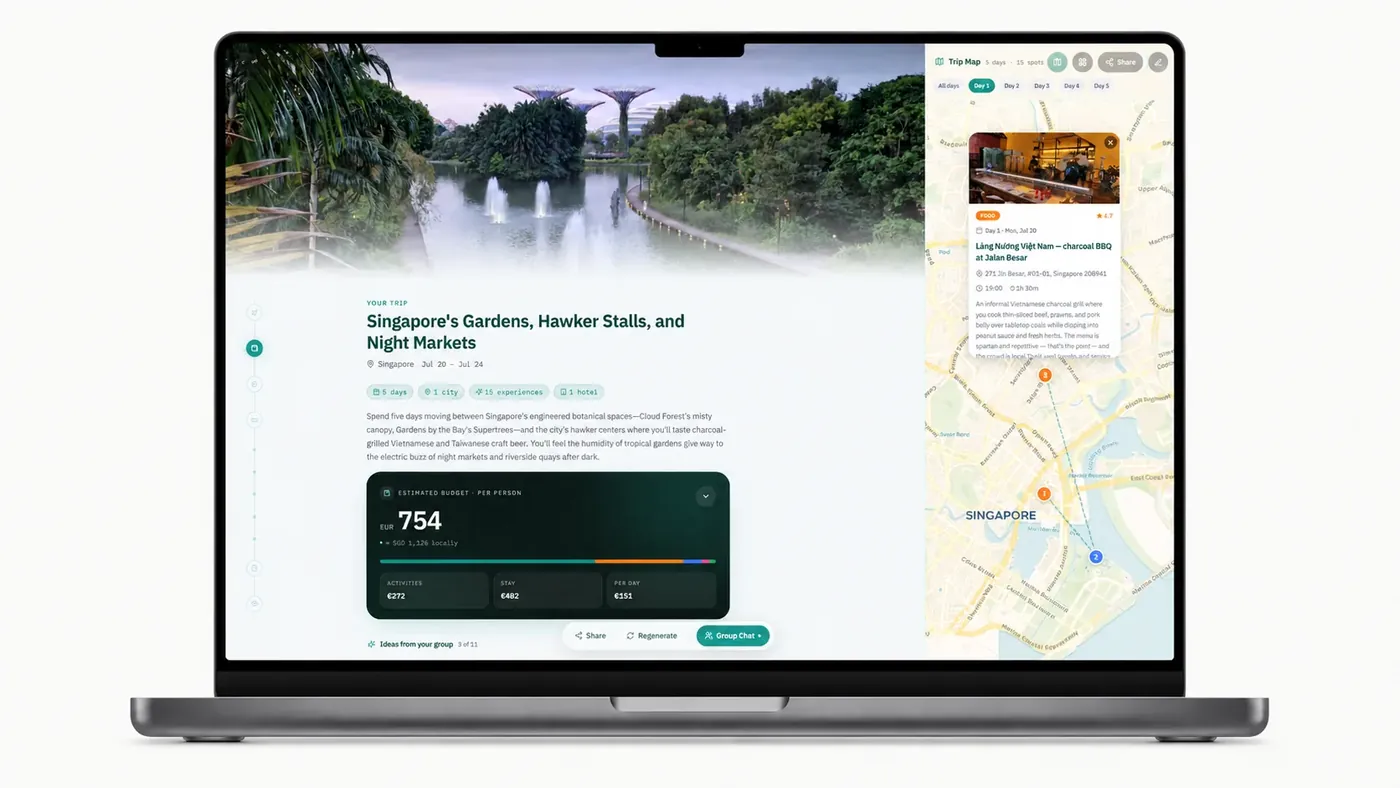
Junto AI maps every day to your pace, dates and the people you're with, with venues, timings and a real route you can actually follow.
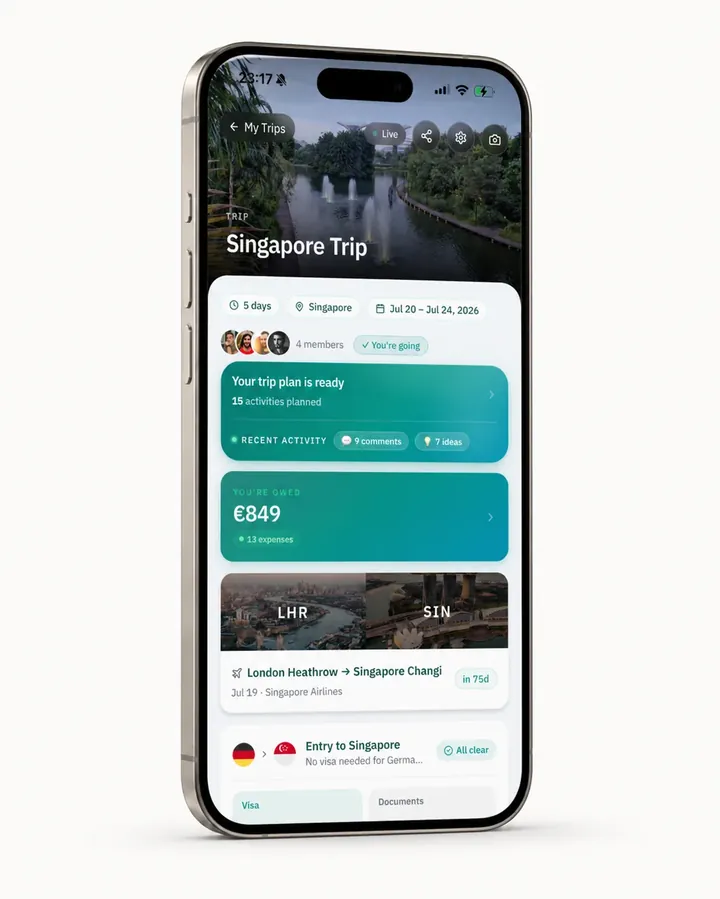
Dates, crew, flights, expenses and entry requirements all in one dashboard, so nothing falls through the cracks.

Track every shared expense and let Junto figure out who owes what. No spreadsheets, no awkward Venmos.

Comments, reactions and decisions sit on the actual itinerary item: venue, day, address. No parallel group chat that drifts away from the plan.
Everything you need to plan, book and remember the trip, in one place.